
Crawl Budget Optimization:
Search engine spiders have limited time and resources to spend on any single website. For small business websites in Malaysia, making sure search crawlers spend their budget on high-value pages is critical for fast indexing and strong ranking performance.
What Is Crawl Budget and Why Does It Matter?
Crawl budget is the total number of pages Googlebot crawls on your website within a given timeframe. Google determines this limit based on server speed, site authority, and page update frequency.
If Googlebot spends time on useless URLs, duplicate pages, or slow-loading scripts, it may miss important service offerings, local promos, or new blog content.
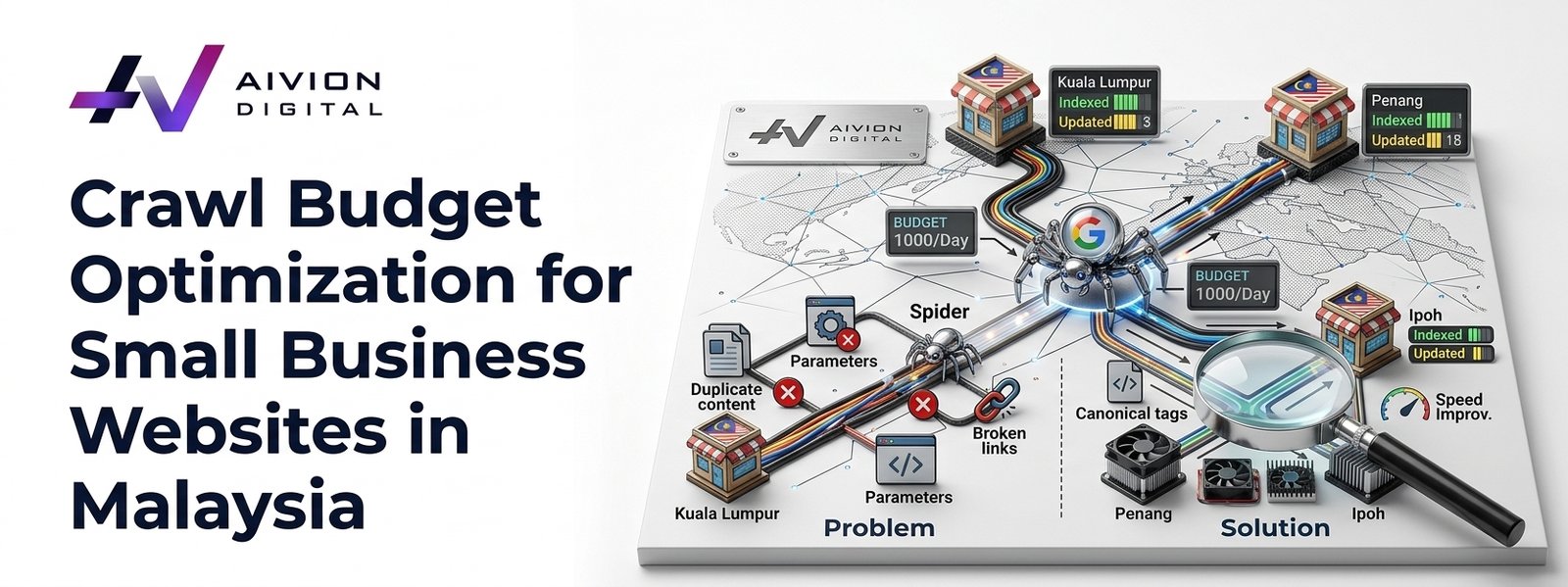
1. Eliminate Duplicate Content and Parameter URLs
Duplicate pages drain crawler capacity fast. E-commerce platforms and local service sites often generate multiple URLs for the same item through filters, sorting options, and search parameters.
Use Canonical Tags: Direct crawlers to the primary version of a page using explicit rel=”canonical” tags.
Block Search Filter Parameters: Use Google Search Console settings or your robots.txt file to block tracking parameters from being indexed.
Clean Up Trailing Slashes: Ensure all URLs consistently use either a trailing slash or non-trailing slash to avoid serving identical content on two paths.
2. Fix Broken Links and Redirect Chains
Every time Googlebot hits a 404 error or passes through a chain of multiple redirects, crawler time is wasted without discovering valuable content. Carrying out a periodic SEO audit helps identify broken links and redirection loops before search engines find them.
To keep indexing efficient:
Audit internal links routinely to catch broken links before crawlers do.
Replace multi-step redirect chains (Page A -> Page B -> Page C) with a direct 301 redirect to the final URL.
Clean up internal links pointing to deleted or archived product pages.
3. Keep Your XML Sitemap Clean and Updated
An XML sitemap acts as a direct roadmap for search engine crawlers. Submitting a cluttered sitemap forces Googlebot to process dead ends.
Include only indexable pages returning a 200 HTTP status code.
Exclude canonicalized pages, blocked URLs, and pages with
noindexdirectives.Keep your XML sitemap automated so new services or posts update in real time.
4. Improve Server Response Time and Site Speed
Googlebot reduces its crawl rate if a website responds slowly or experiences server timeouts. Slow host responsiveness directly shrinks your crawl budget.
Fixing site speed and resolving rendering bottlenecks is essential for seamless indexing. Check out our detailed case study on how to fix Core Web Vitals to see how speed optimizations directly improve technical search performance.
Optimizing your site speed encourages search engines to crawl more pages per visit:
Host your website on fast local or cloud infrastructure with Malaysian edge nodes.
Enable browser caching and Gzip or Brotli compression.
Work with a specialized custom web design team to build a clean, lightweight site architecture from scratch.
Boost Your Local Search Visibility With Aivion
Optimizing crawl budget ensures your high-value pages get indexed faster and rank higher in local search results. As a trusted seo agency, Aivion handles technical site audits, code cleanup, and indexation strategies tailored for growing businesses.
Whether you need a full technical review from a dedicated seo agency kuala lumpur or ongoing support through specialized SEO services, our team helps eliminate technical bottlenecks. From targeted seo service kl solutions to comprehensive search strategies, we help local businesses maximize search engine visibility.
Partner with Aivion today to streamline your technical SEO and improve your search performance across Malaysia. Visit our Facebook Page.