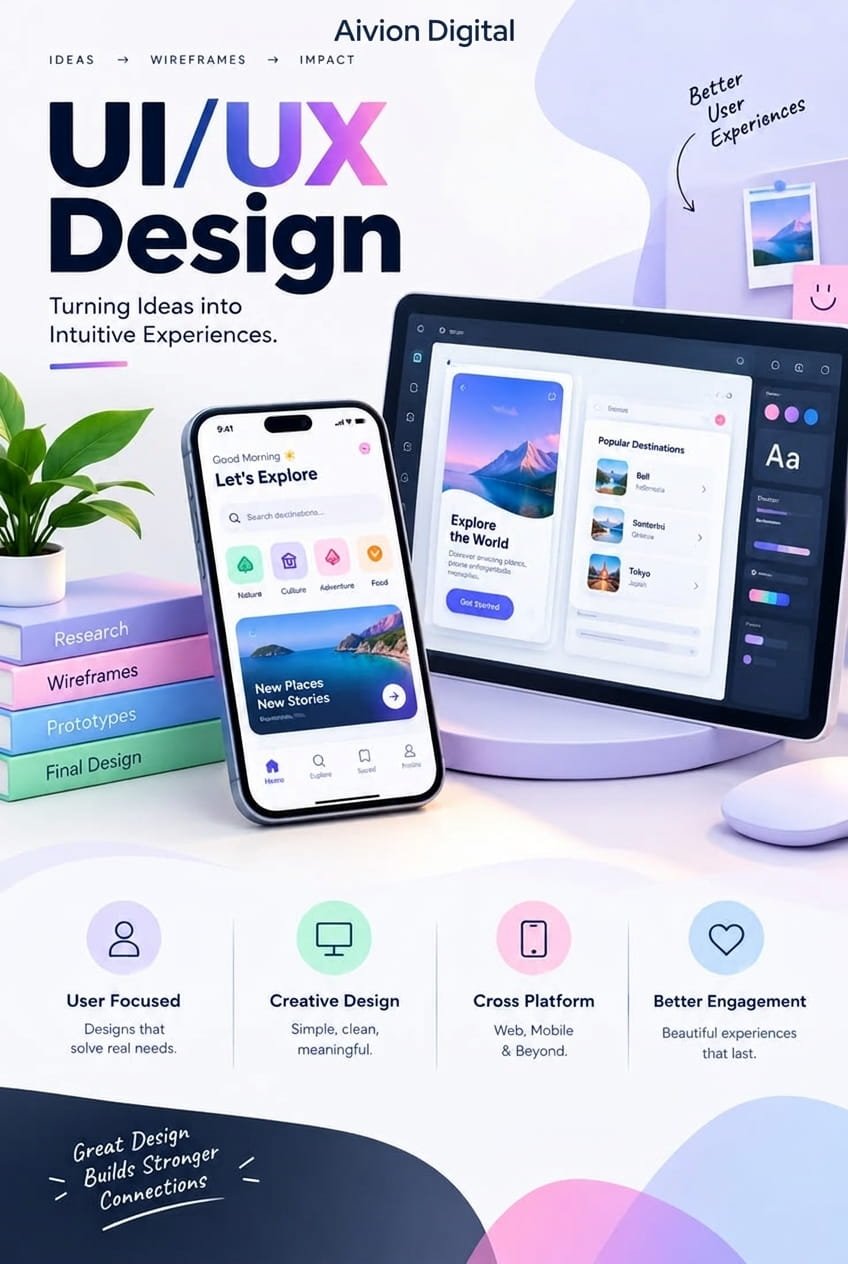
People don’t leave a website because it’s missing features. They leave because they can’t find what they need, don’t trust what they see or get stuck halfway through. Our UI UX design services at Aivion Digital help Malaysian businesses fix that, with designs built around how real users think, browse and decide.
We research your users, map the journey, design the screens and test the result. You get a clear, attractive interface your developers can build with confidence.
UI UX design is the work of shaping how a website, web app or mobile app looks and how it feels to use.
UX (user experience) is about the journey. Can people find what they want? Do the steps make sense? Is it easy to finish a purchase, book a service or complete a task? UI (user interface) is about the screen itself: layout, colours, typography, buttons, icons and visual style.
Good design needs both. A beautiful interface that confuses people doesn’t work. A well-planned journey that looks cheap doesn’t convince anyone.
In practice, it covers:
It suits startups building a first product, businesses redesigning an outdated website, ecommerce brands with weak conversion, and teams building web apps, SaaS products or dashboards.
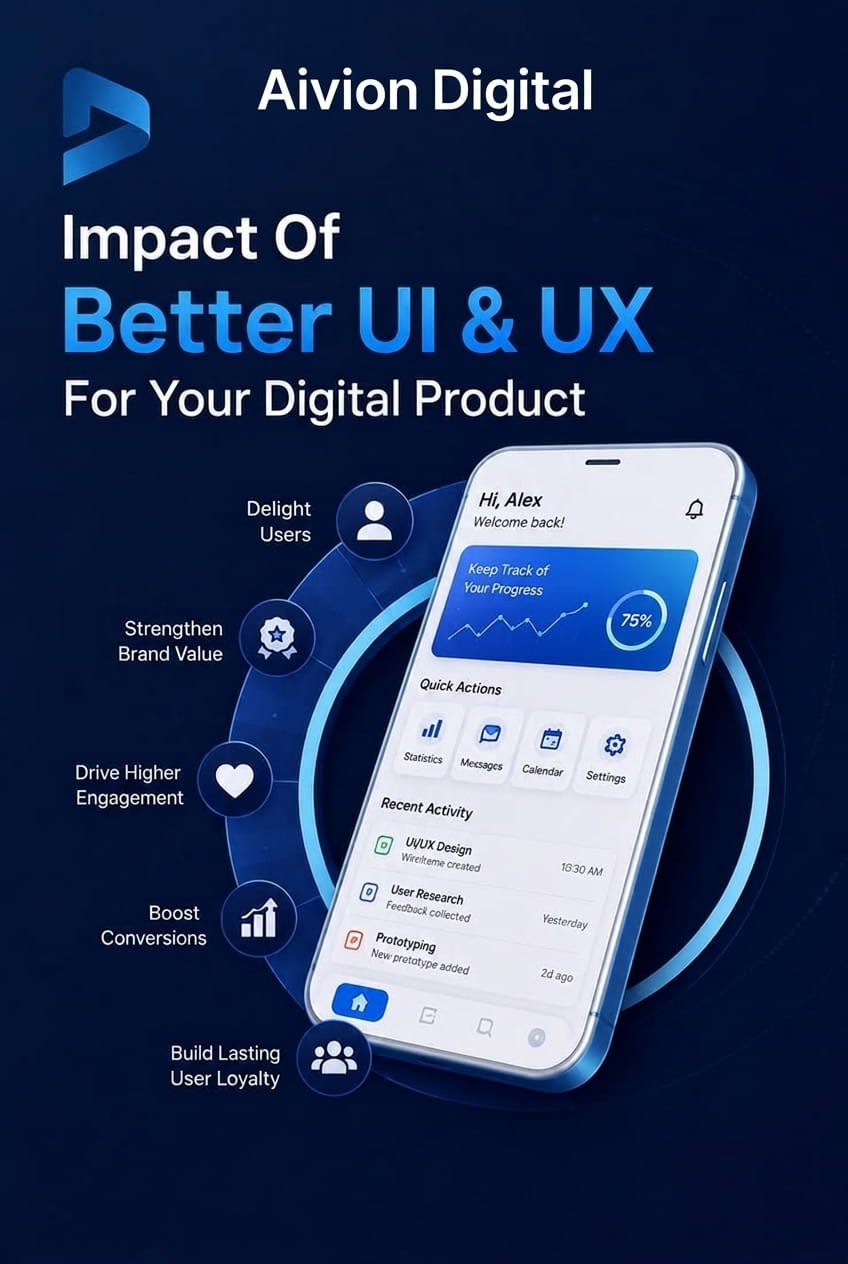
Your design is often the first impression, and also the reason someone stays or leaves. Good UI UX design helps you:
Results depend on your product, audience and traffic. We’ll tell you honestly what’s realistic.
Clear navigation and layouts help users find what they need quickly.
Simpler forms, clearer calls to action and smoother checkout paths remove friction.
A consistent, professional interface makes your brand feel credible.
Most Malaysian users browse on their phones, so layouts need to be built for small screens first.
Testing ideas in prototypes is cheaper than rebuilding finished code.
A design system keeps new pages and features consistent as you scale.
We review your existing website or app to find usability problems. We check navigation, page layouts, forms, mobile experience, accessibility and key user paths. You get a prioritised list of issues and recommended fixes.
We learn who your users are and what they’re trying to do. Depending on the project, that can include stakeholder interviews, user interviews, surveys, competitor reviews, analytics and heatmap analysis.
We map the steps users take from first visit to final action, and design the flows for key tasks such as sign-up, booking, checkout or onboarding. This shows where friction happens and where to improve.
We organise your content and features so they’re easy to find. That includes site maps, menu structure, page hierarchy and labelling.
We create low-fidelity wireframes that show layout and structure without visual styling. These let you review content, flow and priorities before spending time on detailed design.
We build clickable prototypes in Figma so you can see and test how the product works before development begins. Prototypes make feedback clearer and reduce costly changes later.
We design the look of your screens: layout, colour, typography, imagery, icons and spacing. The style follows your brand and is built for clarity, readability and responsive use across devices.
We design for phones first, then adapt for tablets and desktops, so each screen size gets a proper layout instead of a squeezed copy of the desktop version.
For online stores, we design homepages, category pages, product pages, filters, cart and checkout around how shoppers browse and buy. The aim is to make products easy to find, compare and purchase.
We design interfaces for web apps, SaaS products and dashboards, including onboarding, navigation, data tables, charts, forms and settings. Complex products are broken into clear, usable steps.
We design focused landing pages for campaigns and lead generation, with clear messaging, strong layouts and obvious next steps.
We design the small details that make a product feel polished, such as button states, form feedback, loading indicators, transitions and hover effects.
We build reusable design systems with colour palettes, type styles, spacing rules, buttons, forms and components. This keeps your product consistent and speeds up future design and development.
We follow accessibility good practice, such as readable text sizes, sufficient colour contrast, clear focus states and logical layouts, so more people can use your product comfortably.
We test prototypes or live designs with real users, observe where they struggle and refine the design based on what we learn.
We prepare organised Figma files with specs, assets, components and notes, and support your developers with questions during build. If you need the design built, see our website development services.
We learn about your business, users, product and goals. We review any existing designs, analytics and feedback, and agree on scope and success measures.
We study your users, competitors and current experience to find the real problems, not just the visible ones.
We map user journeys, plan the site or app structure and define the key flows. You review and approve the direction before we move into design.
We create wireframes and interactive prototypes so you can see how the product works and give feedback early.
We design the final interface, applying your brand and building out components and screens for desktop and mobile.
We test the design with users where the project allows, and refine it based on what we learn and what you tell us.
We deliver the final design files, specs and design system, and support your developers during build.
Choosing a design partner is a trust decision. Here’s what you can expect from us:
We start with your audience and business objectives, not just a visual style.
Because we also work on SEO and development, we think about speed, structure and conversion from the start.
You’ll know what you’ll receive before work begins.
Our designs are organised and documented so they can be built accurately.
We consider mobile-first users, bilingual content and local buying habits.
We tell you what’s realistic and explain our design decisions.
We can help your team during build and after launch.
We design for businesses across different sectors, including ecommerce and retail, technology and SaaS, professional services, education, property and local businesses. Each sector has different users and needs, so we start by understanding yours.
It depends on the number of screens, the type of product, the depth of research and testing, and whether a design system is needed. We review your requirements first, then give you a custom quote with a clear scope.
Timelines depend on the size of the project, how much research is needed and how quickly feedback comes in. We’ll give you a realistic schedule once the scope is agreed.
UX design focuses on the overall experience, including how users move through a product and complete tasks. UI design focuses on the visual interface, such as layouts, colours, typography and buttons. Good products need both.
Depending on the scope, you’ll receive research findings, user flows, wireframes, interactive prototypes, final UI designs, a design system and organised Figma files ready for developers. We confirm the exact deliverables before starting.
Yes. We start with a UX audit to find what’s causing problems, then redesign the areas that matter most. We can improve specific pages or rework the whole experience.
Yes. We design websites, web apps, SaaS products, dashboards and mobile app interfaces. We design mobile first and adapt for larger screens where needed.
Both. We prepare developer-ready files and support your team during build, or we can build the final website or store ourselves through our development services.
Yes, where the project allows. We can test prototypes or live pages with real users and use the results to improve the design. The depth of testing depends on your scope and budget.